Paint waste increases operating costs and creates additional cleaning and disposal work. This is especially important when using high-value automotive coatings, industrial finishes, or customized colors.
Small improvements in preparation and equipment selection can help workshops use coatings more efficiently.
1. Select the Correct Cup Capacity
Using an oversized paint cup for a small job often leads to unnecessary leftover material. A cup that is too small may require repeated refilling and interrupt the painting process.
Choose the capacity according to:
- Size of the workpiece
- Number of parts
- Expected coating coverage
- Number of coating layers
- Type of paint being used
Having multiple cup sizes available allows painters to match the system to each project.
2. Measure and Mix Accurately
Incorrect mixing ratios may affect viscosity, drying time, color consistency, and coating performance. It can also result in unusable paint.
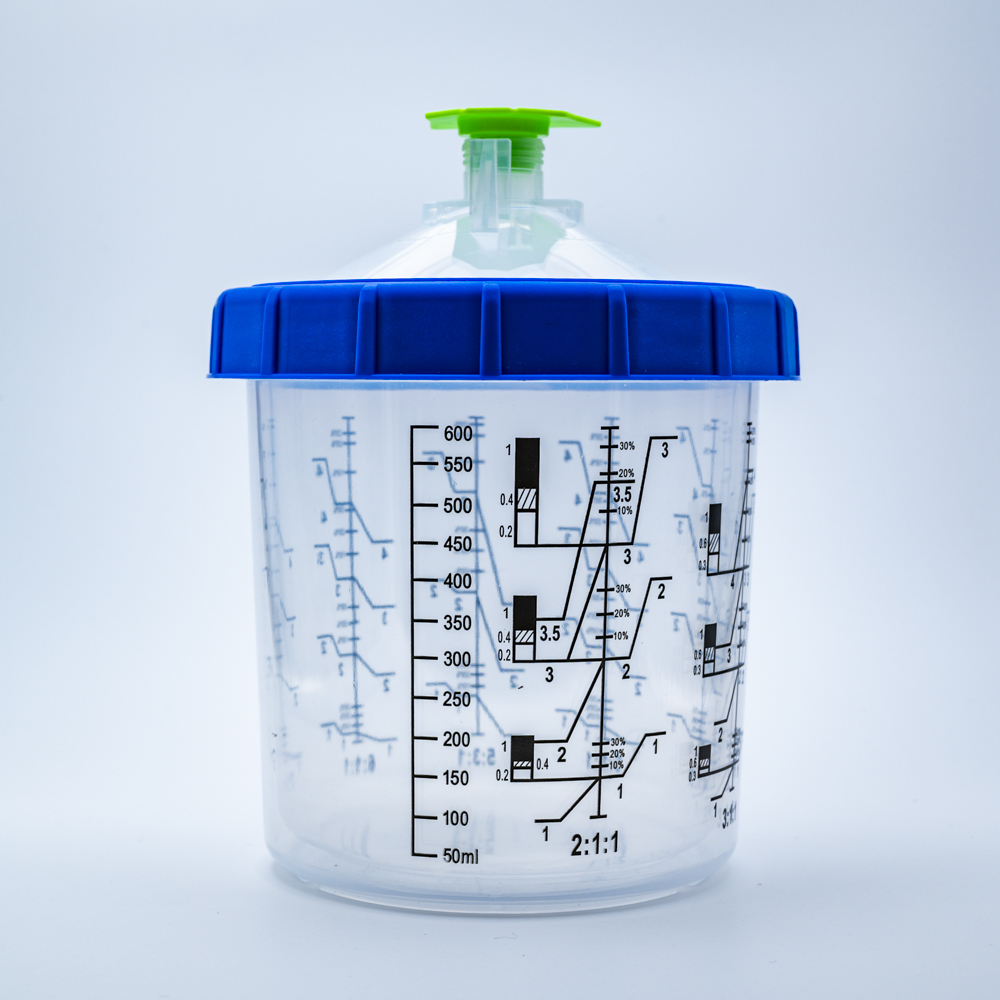
Use clear measurement markings and follow the coating manufacturer’s recommended mixing ratio. Only prepare the quantity needed for the current project whenever possible.
3. Use a Stable Paint Cup System
A secure paint cup and adapter connection helps maintain consistent paint flow. Loose fittings or unstable cup pressure may cause interruptions, dripping, or uneven spraying.
Before working, inspect the cup, lid, adapter, sealing components, and spray gun connection.
4. Store Unused Paint Properly
Some paint cup systems allow unused coating to be sealed temporarily for later use. This can reduce waste when a project is paused or when mixed paint remains after spraying.
Always confirm that the coating is suitable for temporary storage. Store it according to the paint supplier’s recommendations and clearly identify the color, mixing time, and material type.
5. Maintain Correct Spray Settings
Incorrect air pressure, fluid adjustment, or spray distance can create excessive overspray. Painters should adjust the spray gun according to the coating, nozzle size, and workpiece.
A test spray before beginning the full project can help confirm:
- Spray pattern
- Paint flow
- Atomization
- Working pressure
- Application distance
Correct settings improve transfer efficiency and help produce a more uniform finish.
Additional Ways to Improve Efficiency
Workshops can also reduce waste by keeping mixing areas organized, training operators, using compatible accessories, and replacing damaged components promptly.
Standardized procedures make it easier to control material consumption across multiple workers and projects.
Conclusion
Reducing paint waste does not require a complete change in equipment. Selecting the correct cup size, mixing accurately, maintaining stable connections, storing leftover material properly, and optimizing spray settings can deliver meaningful improvements.